
Get Support
+1 (703) 665-8657
 By:
By: 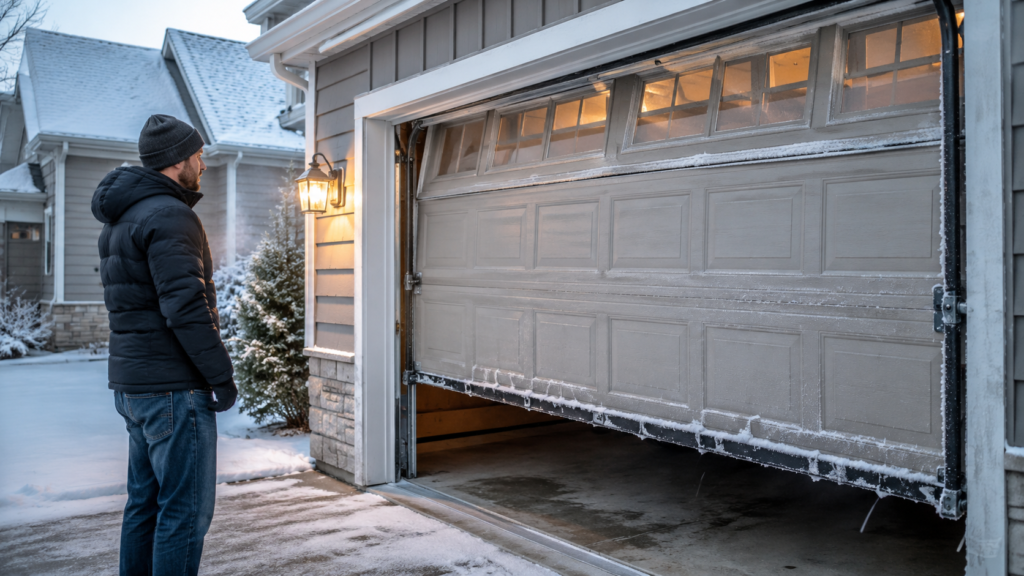
When a Normal Morning Suddenly Turns Into a Garage Door Problem
It usually happens on the coldest morning of the week. You’re ready to head out, coffee in hand, and you press the garage remote… nothing. Or worse, you hear a loud snap that makes your stomach drop.
For many Northern Virginia homeowners, this is the moment they realise something has gone wrong with the garage door system—often the springs.
Garage door springs carry the entire weight of the door, and winter puts them under extra pressure. The cold doesn’t just make things uncomfortable for us; it changes how metal behaves, how lubricants perform, and how mechanical systems respond.
Understanding why garage door springs break more often in winter can help you prevent sudden failures, avoid unsafe situations, and extend the life of your garage door system.
Why Garage Door Springs Break More Often in Winter
Garage door springs are tightly wound, high-tension components designed to counterbalance hundreds of pounds. They already work under extreme stress—but winter introduces additional challenges that accelerate wear.
Cold weather affects:
- Metal contraction and brittleness
- Lubrication thickening
- Increased mechanical resistance
- Sudden temperature fluctuations
When these factors combine, springs become more vulnerable to snapping or losing tension.
In simple terms: winter doesn’t create weak springs, but it exposes weaknesses that were already developing.
How Garage Door Springs Actually Work (Simple Breakdown)
To understand the winter issue, it helps to know what springs do.
Garage doors typically use:
- Torsion springs (mounted above the door)
- Extension springs (mounted along the sides)
Their job is to:
- Balance the weight of the door
- Reduce strain on the opener system
- Allow smooth lifting and closing
Without properly functioning springs, the entire system becomes unsafe and unbalanced.
The Main Causes of Spring Breakage in Winter
Winter doesn’t “damage” springs instantly—it slowly increases stress until failure happens.
1. Metal Contracts in Cold Temperatures
Metal naturally contracts when temperatures drop. This leads to:
- Increased tension inside the spring
- Reduced flexibility
- Higher risk of snapping under load
Even small contractions matter because springs operate under precise tension balance.
2. Lubrication Becomes Thick and Inefficient
Springs rely on lubrication to reduce friction. In winter:
- Grease thickens
- Movement becomes less smooth
- Extra strain builds during each cycle
Without proper lubrication, springs wear faster and become noisy or stiff.
3. Sudden Temperature Changes (Thermal Shock)
Northern Virginia winters often swing between freezing nights and slightly warmer afternoons.
This constant expansion and contraction creates:
- Micro-stress fractures in metal
- Weak points in coil structure
- Faster fatigue over time
4. Increased Door Resistance in Cold Weather
Cold weather affects more than springs. Other components also stiffen:
- Rollers
- Hinges
- Tracks
When the door becomes harder to move, springs must work harder than usual.
5. Old or Near-End-of-Life Springs Fail Faster in Winter
Most springs are rated for a limited cycle life (commonly 10,000 cycles).
If they are already aged:
- Winter stress becomes the final trigger
- Breakage often happens suddenly without warning
Warning Signs Your Garage Door Springs Are Struggling
Springs rarely fail without warning. Homeowners often notice subtle changes first.
Common Symptoms Include:
- Door feels heavier than usual
- Loud squeaking or grinding sounds
- Uneven lifting (one side rises faster)
- Door stops halfway and drops
- Visible gaps in torsion spring coils
- Jerky or slow movement
Quick Reference Table
| Symptom | What It May Indicate |
| Loud snap sound | Spring breakage |
| Heavy door | Loss of spring tension |
| Uneven movement | Imbalanced spring system |
| Slow response | Cold-related stiffness |
| Visible gap in spring | Complete spring failure |
Real-Life Example Many Homeowners Experience
A homeowner in Northern Virginia notices their garage door moving slower every morning during January. They assume it’s just “cold weather behavior.”
A week later, the door suddenly refuses to lift, and a loud snapping sound echoes from the garage.
What actually happened?
The spring was already weakening, and winter temperature stress pushed it past its limit.
This is extremely common during colder months—and often preventable with early awareness.
Why Winter Makes Spring Failure More Sudden
One of the most frustrating things about garage door springs is how quickly they fail once the problem escalates.
In winter:
- Weak springs don’t “slowly fail”
- They often snap suddenly
- There is little to no warning in final stages
This sudden failure is why many homeowners feel caught off guard.
Preventive Tips to Reduce Winter Spring Problems
While you can’t control the weather, you can reduce stress on your garage door system.
Helpful Prevention Steps:
- Keep springs lightly lubricated (silicone-based lubricant)
- Avoid unnecessary door usage in extreme cold
- Inspect for early signs of wear before winter starts
- Keep tracks clean and debris-free
- Ensure rollers move smoothly
What Homeowners Should Avoid:
- Forcing a stuck garage door open
- Ignoring unusual noises
- Using excessive lubrication (can attract dirt)
- DIY adjustments on high-tension components
Springs store a large amount of energy and can be dangerous if handled incorrectly.
Seasonal Maintenance Matters More Than You Think
Winter preparation is often overlooked, but it plays a huge role in preventing sudden failures.
A simple seasonal check can include:
- Listening for new sounds
- Observing door balance
- Checking smooth movement
- Looking for visible wear on coils
Even small adjustments in time can extend system life significantly.
The Safety Factor Homeowners Should Never Ignore
A broken spring is not just an inconvenience—it can be a safety risk.
Risks include:
- Door suddenly dropping
- Strain on garage door opener system
- Potential injury from heavy movement
- Vehicle damage if door falls unexpectedly
If something feels “off,” it’s better not to delay inspection.
Why Northern Virginia Homes See More Winter Spring Issues
In areas like Northern Virginia, weather patterns make the problem more common:
- Frequent freezing temperatures
- Moisture buildup followed by cold snaps
- Seasonal humidity changes
- Sudden temperature drops overnight
These fluctuations put repeated stress on mechanical systems like garage doors.
How to Extend the Life of Your Garage Door Springs
While springs eventually wear out, their lifespan can be improved.
Best practices include:
- Regular lubrication (light and controlled)
- Seasonal inspections
- Avoiding excessive daily cycles
- Ensuring balanced door alignment
- Addressing small issues early
A well-maintained system can perform significantly longer than a neglected one.
FAQs
Why do garage door springs break more often in winter?
Cold temperatures cause metal contraction, increased tension, and lubrication thickening, all of which increase stress on the springs.
Can cold weather alone break a garage door spring?
Cold weather doesn’t directly break springs, but it accelerates existing wear and weak points, leading to failure.
What does a broken garage door spring sound like?
Most homeowners hear a loud snapping or banging sound when the spring breaks.
Is it safe to use a garage door with a broken spring?
No. It can be unsafe because the door becomes extremely heavy and unstable.
How long do garage door springs usually last?
On average, springs last around 7–12 years depending on usage and maintenance.