
Get Support
+1 (703) 665-8657
 By:
By: 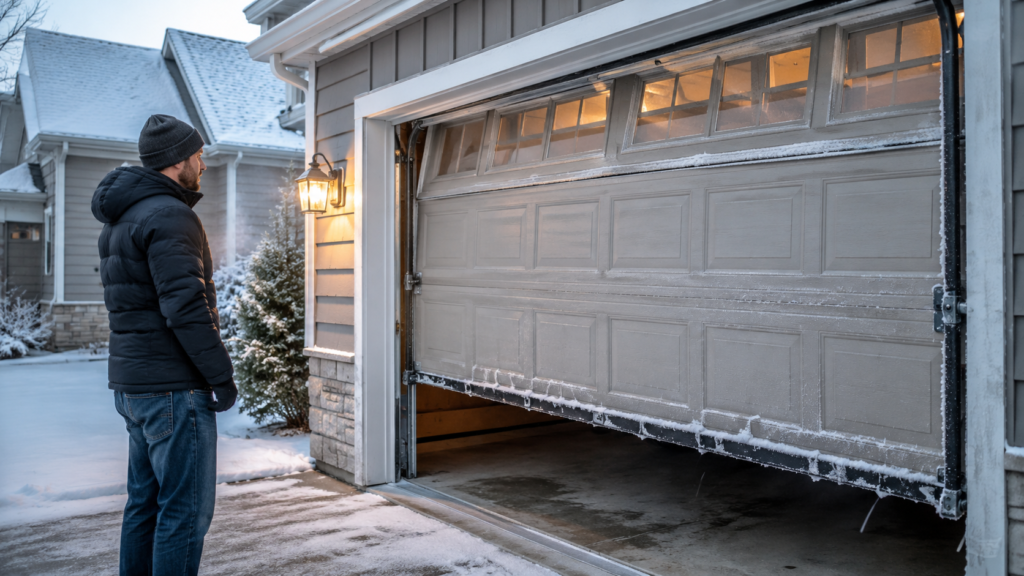
When Your Garage Door Suddenly Feels “Tired” in Winter
If you’ve ever stood in your driveway on a freezing morning in Northern Virginia waiting for your garage door to slowly crawl open, you already know how frustrating it feels. Everything seems fine the night before, but as soon as the temperature drops, your garage door opener sounds sluggish and hesitant, almost like it’s struggling to wake up.
This is a very common winter problem homeowners face, and it’s not just your imagination. Cold weather directly affects the mechanical parts, lubrication, metal components, and even the electronic system inside your garage door setup.
Understanding why your garage door opens slowly in cold weather helps you avoid unnecessary stress, prevent damage, and keep your home more secure during harsh winter months.
Let’s break it down in a practical, homeowner-friendly way.
What “Slow Garage Door in Winter” Actually Means
When homeowners say their garage door is slow in winter, it usually refers to:
- The door moving slower than usual during opening or closing
- A delayed response after pressing the remote
- A loud, strained motor sound
- Jerky or uneven movement
- Partial stops before fully opening
These symptoms often appear when temperatures drop below freezing or during damp, icy mornings.
Why Your Garage Door Opens Slowly in Cold Weather
Cold weather doesn’t just affect your comfort—it changes how materials behave. Your garage door system depends on smooth mechanical movement, and winter interferes with nearly every part of that system.
Let’s explore the real reasons behind it.
Main Causes of a Slow Garage Door in Cold Weather
1. Thickened Lubrication and Grease
One of the most common reasons is surprisingly simple: lubrication.
In cold temperatures, grease and oil used on rollers, hinges, and springs become thicker and less fluid. This creates resistance in movement.
What happens next:
- Rollers struggle to glide smoothly
- Hinges feel stiff
- The opener works harder than normal
- Movement slows down significantly
This is especially noticeable in older systems where lubrication hasn’t been refreshed in a while.
2. Metal Contraction in Low Temperatures
Metal naturally contracts when exposed to cold weather. Since garage doors are made of steel or aluminum, this physical change affects alignment and movement.
You may notice:
- Slight tightening in tracks
- Increased friction between moving parts
- Noisy operation
- Uneven lifting
Even a minor contraction can change how smoothly your door travels along its track system.
3. Weak or Cold-Affected Garage Door Opener Battery
If your garage door uses a remote or backup battery system, cold weather can reduce battery efficiency.
Signs include:
- Delayed response from remote
- Reduced signal strength
- Intermittent operation
Lithium and alkaline batteries both lose power output in freezing conditions, which directly impacts performance.
4. Increased Strain on Springs and Counterbalance System
Your garage door springs are responsible for lifting most of the door’s weight. In winter, they often become less responsive due to stiffness and tension changes.
This leads to:
- Slower lifting speed
- Uneven motion
- Extra strain on the opener motor
A weakened counterbalance system is one of the most overlooked causes of sluggish movement.
5. Cold-Weather Impact on Garage Door Sensors
Safety sensors are designed to prevent accidents, but cold weather, frost, or condensation can interfere with their alignment.
Possible issues include:
- Misalignment due to contraction
- Moisture blocking infrared beams
- False safety triggers
When sensors malfunction, the door may pause or move slower than normal as a safety response.
6. Track Obstructions from Ice, Dirt, or Moisture
Winter weather brings moisture, dirt, and sometimes ice buildup.
This can cause:
- Blocked or rough tracks
- Increased friction during movement
- Sudden jerks while opening
Even a small obstruction can slow down the entire system.
7. Aging or Poor Maintenance
Older garage door systems naturally struggle more in winter. Lack of maintenance amplifies all cold-weather effects.
Common issues include:
- Dry rollers
- Rust buildup
- Worn-out springs
- Misaligned tracks
Quick Symptom vs Cause Table
| Symptom | Likely Cause |
| Slow or delayed opening | Thick lubrication or weak battery |
| Jerky movement | Track obstruction or metal contraction |
| Loud grinding noise | Lack of lubrication |
| Door stops halfway | Sensor issues or spring tension imbalance |
| Remote delay | Cold-affected battery |
How Cold Weather Changes Your Garage Door System
Cold weather doesn’t just “slow things down”—it physically changes how your system behaves:
- Lubricants become sticky instead of smooth
- Metal contracts and tightens tolerances
- Electronics lose efficiency
- Springs become less flexible
- Moisture turns into ice or condensation
All of these factors combine, making your garage door feel unusually heavy and slow.
Practical Solutions Homeowners Can Try
1. Use Cold-Weather Safe Lubrication
Switch to a silicone-based lubricant designed for low temperatures. This helps maintain smooth movement even during freezing mornings.
Focus on:
- Hinges
- Rollers
- Springs
- Tracks (light application only)
2. Check and Replace Remote Batteries
A simple battery replacement often solves delayed response issues during winter.
3. Keep Tracks Clean and Dry
Regularly inspect tracks for:
- Dirt buildup
- Ice formation
- Moisture accumulation
A clean track reduces unnecessary friction.
4. Inspect Door Balance
A properly balanced garage door should stay halfway open without drifting. If it doesn’t, the spring system may need adjustment.
5. Clear Sensor Areas
Make sure sensors are:
- Aligned properly
- Free from dust or frost
- Mounted securely
Even minor misalignment can trigger slow or interrupted movement.
6. Reduce Strain During Extreme Cold
If temperatures drop significantly:
- Avoid repeated opening/closing cycles
- Let the system warm slightly before heavy use
Common Mistakes Homeowners Make in Winter
Many homeowners unintentionally make the problem worse by:
- Ignoring early signs of slow movement
- Using the wrong lubricant (or none at all)
- Forcing the door when it resists
- Not checking sensor alignment
- Delaying seasonal maintenance
Ignoring these small issues often leads to bigger mechanical failures later.
Safety Considerations You Should Not Ignore
A slow garage door isn’t always just an inconvenience—it can be a warning sign.
Be cautious if:
- The door struggles to lift fully
- You hear grinding or snapping sounds
- The door moves unevenly
- Springs look worn or stretched
Garage doors are heavy systems under high tension. Any irregular movement should be taken seriously.
Preventive Maintenance Tips for Winter
To avoid dealing with a slow garage door every winter:
- Schedule seasonal lubrication before cold months
- Inspect springs and rollers twice a year
- Keep the track system clean
- Replace aging components early
- Test door balance regularly
Consistency is key—small maintenance steps prevent major winter headaches.
Final Takeaway
When your garage door opens slowly in cold weather, it’s not random—it’s the result of physical changes in materials, lubrication behavior, and mechanical stress caused by low temperatures.
The good news is that most of these issues are predictable and preventable. With basic seasonal care and awareness of early warning signs, you can keep your garage door running smoothly even during the coldest mornings in Northern Virginia.
A slow garage door is often your system’s way of asking for attention—not a failure, but a signal.
FAQs
Why does my garage door get slower only in winter?
Cold temperatures thicken lubricants, reduce battery efficiency, and cause metal parts to contract, all of which slow down movement.
Can cold weather damage my garage door opener?
Yes, prolonged exposure to freezing temperatures can strain the motor and reduce efficiency, especially if the system is already worn.
How do I fix a slow garage door in cold weather?
Start with lubrication, battery replacement, sensor alignment, and track cleaning. These resolve most common issues.
Is it safe to use a slow garage door?
If it’s just slower but stable, it’s usually safe. However, grinding noises, jerky motion, or imbalance should be checked immediately.
Should I lubricate my garage door in winter?
Yes, but use a silicone-based or cold-weather-rated lubricant to ensure smooth performance in low temperatures.