Get Support
+1 (703) 665-8657
 By:
By: 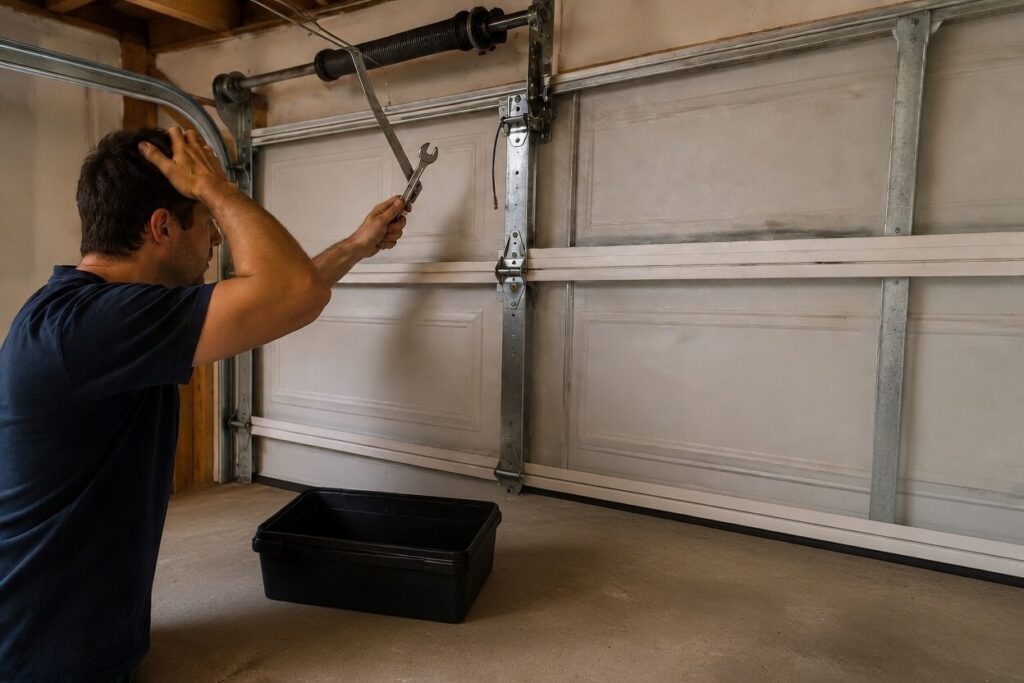
The “Quick Fix” That Often Turns Into a Bigger Problem
When a garage door suddenly becomes noisy, uneven, or refuses to close properly, many homeowners immediately search for a quick DIY solution online. At first, fixing it yourself seems like the cheaper and faster option.
After all, tightening a bolt or adjusting a part doesn’t sound complicated.
But garage door systems are far more complex than they appear. Behind those tracks and panels are tightly wound springs, high-tension cables, heavy moving sections, and sensitive opener systems working together under constant pressure.
In many Northern Virginia homes, what starts as a simple DIY attempt often turns into a much larger and more expensive issue later.
Understanding why DIY garage door repairs can cost more later helps homeowners avoid unnecessary damage, safety risks, and long-term system problems.
Why Garage Door Systems Are More Complicated Than They Look
Most garage doors weigh hundreds of pounds and rely on balanced tension to operate safely.
Several parts work together simultaneously:
- Springs
- Cables
- Tracks
- Hinges
- Rollers
- Drums
- Opener systems
Changing or adjusting one component incorrectly can affect the entire system balance.
That is why even “small fixes” sometimes create bigger hidden problems.
Why Homeowners Attempt DIY Garage Door Fixes
Most DIY attempts come from good intentions.
Homeowners often want to:
- Save money
- Avoid waiting for help
- Handle small issues quickly
- Follow online tutorials
- Prevent inconvenience during busy schedules
Unfortunately, garage door systems are not like basic household repairs. Small mistakes can create expensive mechanical strain very quickly.
The Hidden Costs of DIY Garage Door Repairs
DIY repairs sometimes appear cheaper initially, but hidden costs build up over time.
These costs often include:
- Damaged components
- Incorrect part installation
- Additional system wear
- Safety risks
- Shortened equipment lifespan
Many homeowners end up paying more later because the original issue was never properly diagnosed.
Incorrect Diagnoses Are Extremely Common
One of the biggest DIY problems is misidentifying the actual cause.
For example:
- A homeowner hears grinding and assumes rollers are bad
- The real issue is track misalignment
- Rollers are replaced unnecessarily
- The actual problem worsens over time
Garage door symptoms often overlap, making proper diagnosis difficult without experience.
DIY Adjustments Can Create System Imbalance
Garage doors rely heavily on balanced tension.
Improper adjustments may cause:
- Uneven movement
- Extra opener strain
- Crooked door alignment
- Faster roller wear
- Cable stress
Even a small imbalance affects the entire operation of the system.
Why Springs and Cables Are Dangerous to Handle
Garage door springs operate under extreme tension.
Attempting DIY adjustments on:
- Torsion springs
- Extension springs
- Lift cables
Can become dangerous very quickly.
A sudden release of tension can cause:
- Severe injury
- Property damage
- Bent tracks
- Door collapse
Many homeowners underestimate how much force these systems contain.
Real-Life Scenario Homeowners Frequently Experience
A homeowner notices the garage door is shaking slightly while opening.
After watching an online tutorial, they tighten random hardware and attempt track adjustments themselves.
Initially, the door seems “better.”
A few weeks later:
- Rollers begin wearing unevenly
- The opener strains harder
- The door starts lifting crookedly
- Additional parts become damaged
What could have remained a minor issue slowly turns into a much larger mechanical problem.
Cheap Parts Often Create Bigger Problems
Another common DIY mistake is purchasing low-quality replacement parts online.
Cheap aftermarket components may:
- Wear out faster
- Fail under tension
- Fit improperly
- Create alignment issues
Garage door systems depend on precise compatibility between parts.
Using the wrong components increases long-term wear throughout the system.
DIY Repairs Often Ignore the Root Cause
Many garage door problems are symptoms rather than the actual issue.
For example:
- Loud noise may come from poor balance
- Uneven movement may relate to cable tension
- Jerking may result from track resistance
Fixing only the visible symptom without addressing the root cause usually leads to recurring problems.
Common DIY Mistakes That Increase Long-Term Costs
1. Over-Tightening Hardware
Homeowners often overtighten bolts or brackets, which can:
- Stress hinges
- Distort alignment
- Damage mounting areas
2. Using Incorrect Lubricants
Heavy grease or unsuitable sprays attract dust and debris, creating more friction over time.
3. Forcing the Door Open
When the door sticks, forcing movement can damage:
- Rollers
- Tracks
- Opener systems
4. Ignoring Small Warning Signs
Many homeowners continue using the system despite:
- Grinding sounds
- Crooked movement
- Delayed response
Minor issues often become major repairs later.
Why Garage Door Damage Spreads Quickly
Garage doors are interconnected systems.
When one part struggles:
- Springs compensate harder
- Openers work under greater load
- Rollers experience more friction
- Tracks absorb additional pressure
A single mistake can affect multiple components simultaneously.
How Weather Conditions Make DIY Problems Worse
Northern Virginia weather creates additional stress on garage door systems.
Humidity, cold winters, and seasonal temperature changes can:
- Increase metal expansion and contraction
- Affect spring tension
- Accelerate rust formation
- Change lubrication performance
Improper DIY adjustments may become worse as weather conditions shift.
The Safety Side Many Homeowners Ignore
Most people focus on cost savings and overlook safety.
Garage doors are among the heaviest moving systems in a home.
Poor DIY work can create:
- Sudden door drops
- Off-track movement
- Cable snapping
- Unstable door balance
These situations become especially dangerous for children, pets, and vehicles.
Signs a Previous DIY Attempt Caused More Damage
Sometimes garage doors show clear signs of incorrect repairs.
Common indicators include:
- Crooked door movement
- Loose or mismatched hardware
- Uneven track spacing
- Excessive vibration
- Unusual opener strain
- Repeated recurring issues
If problems keep returning, the original repair may not have addressed the actual cause.
Preventive Maintenance Is Better Than Reactive DIY Fixes
Many expensive issues can be avoided through basic maintenance instead of emergency DIY work.
Helpful habits include:
- Cleaning tracks regularly
- Lubricating moving parts properly
- Watching for early warning signs
- Listening for new noises
- Inspecting rollers and hinges periodically
Preventive care reduces system stress naturally.
What Homeowners Can Safely Do Themselves
Not every garage door task is risky.
Safe homeowner maintenance usually includes:
- Visual inspections
- Cleaning tracks
- Replacing remote batteries
- Light lubrication
- Checking weather seals
These basic tasks help maintain performance without interfering with high-tension components.
DIY vs Long-Term Cost Comparison
| DIY Shortcut | Possible Long-Term Cost |
| Incorrect track adjustment | Uneven door movement |
| Cheap rollers | Faster wear and noise |
| Ignoring imbalance | Opener strain |
| Wrong lubrication | Increased friction |
| Forcing stuck door | Track or cable damage |
Short-term savings often create long-term expenses.
Why Early Professional Attention Often Saves Money
Garage door problems usually worsen gradually.
Addressing small issues early helps prevent:
- Major component wear
- System imbalance
- Structural strain
- Repeated breakdowns
Early correction is almost always less expensive than fixing widespread damage later.
Final Takeaway
Understanding why DIY garage door repairs can cost more later helps homeowners avoid unnecessary risks, frustration, and expensive long-term damage. Garage door systems may look simple from the outside, but they rely on carefully balanced mechanical components working under constant tension.
A small mistake today can slowly create bigger issues throughout the system over time.
Basic maintenance and early attention to warning signs are always smarter than risky DIY shortcuts that may lead to larger problems later.
FAQs
Why are DIY garage door repairs risky?
Garage doors contain high-tension components that can become dangerous if adjusted incorrectly.
Can small DIY mistakes really cause bigger problems?
Yes, even minor alignment or tension mistakes can affect the entire system over time.
What garage door maintenance can homeowners safely do?
Cleaning tracks, lubricating moving parts, and visual inspections are generally safe.
Why does my garage door problem keep returning?
The original issue may not have been diagnosed correctly, causing recurring strain.
Are online garage door tutorials reliable?
Some provide basic guidance, but every garage door system is different and improper adjustments can create additional damage.