
Get Support
+1 (703) 665-8657
 By:
By: 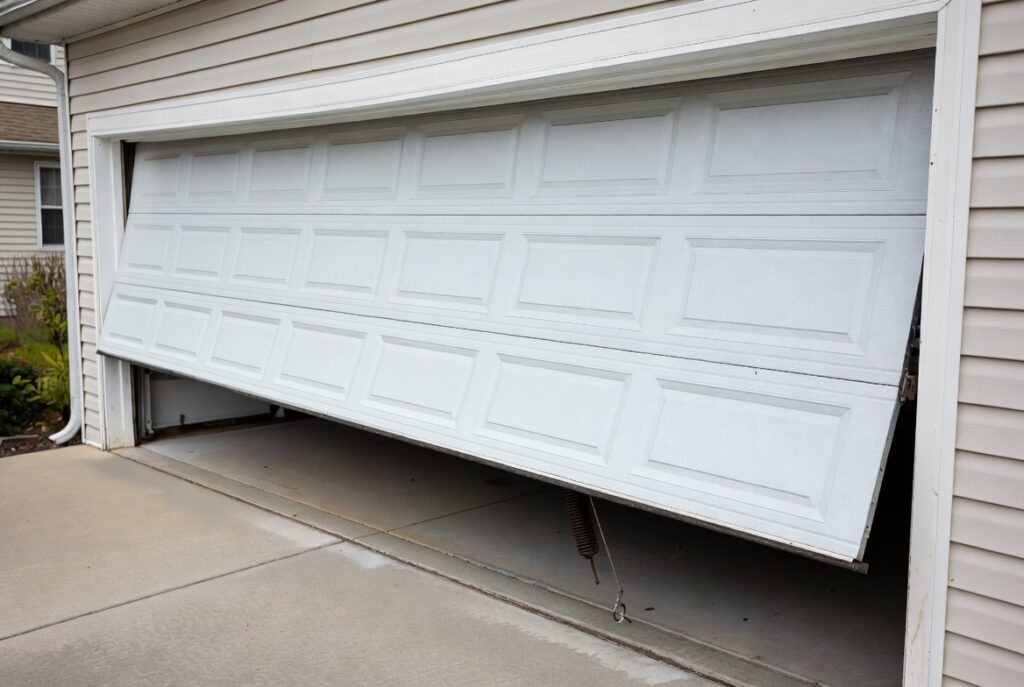
The Risk Most Homeowners Don’t Notice Early
A garage door usually feels like the most “normal” part of a home—until something goes wrong. It opens, it closes, and most people stop thinking about it. But behind that simple movement is a heavy mechanical system that can become dangerous when something starts to fail.
The real issue is that a garage door rarely becomes unsafe overnight. It gives warning signs first, and most homeowners in areas like Northern Virginia tend to ignore them because the door still “kind of works”.
This guide explains when a garage door becomes unsafe to use, what warning signs to look for, and how to protect your home and family before a small issue turns into a serious hazard.
Why Garage Door Safety Should Never Be Ignored
A standard residential garage door can weigh anywhere from 150 to 300 pounds. That weight is controlled by a system of springs, cables, rollers, and tracks working under high tension.
When one part starts failing, the entire system becomes unpredictable.
Unsafe garage doors can lead to:
- Sudden door collapse
- Broken springs snapping under pressure
- Door coming off tracks
- Injury from falling panels
- Damage to vehicles or property
Many accidents happen because warning signs were visible weeks or even months before failure.
When Does a Garage Door Become Unsafe to Use?
A garage door becomes unsafe when its mechanical integrity is compromised to the point where movement is no longer stable, balanced, or controlled.
In simple terms, if the door no longer operates smoothly, quietly, and evenly, it is already moving toward a safety risk.
Here’s a clearer breakdown:
A garage door is unsafe when:
- It moves unevenly or jerks during operation
- It makes loud grinding or popping noises
- It does not stay balanced when manually lifted
- It shows visible cable or spring damage
- It reverses unexpectedly or gets stuck mid-way
If any of these signs appear, continued use increases risk significantly.
Common Causes That Make a Garage Door Unsafe
Understanding why failure happens helps prevent it.
1. Worn or Broken Springs
Springs carry the entire weight of the door. When they weaken or snap, the system becomes unbalanced instantly.
2. Damaged Cables
Frayed or loose cables can cause the door to tilt or drop suddenly.
3. Misaligned Tracks
If the door is not properly guided, it can derail from the system.
4. Worn Rollers and Hinges
Old rollers create resistance, leading to strain and unpredictable movement.
5. Sensor or Opener Malfunctions
Faulty sensors can cause the door to close improperly or fail to stop when needed.
Warning Signs Your Garage Door Is Becoming Unsafe
Most unsafe conditions don’t start with a breakdown—they start with small changes.
Mechanical Warning Signs
- Door shakes or vibrates while moving
- Loud banging or snapping noises
- Door feels heavier than usual
- Uneven lifting from one side
Visual Warning Signs
- Frayed or loose cables
- Rusted or stretched springs
- Bent or misaligned tracks
- Gaps between rollers and rails
Functional Warning Signs
- Door reverses suddenly
- Remote works inconsistently
- Door gets stuck halfway
- Manual operation feels difficult
If even one of these is happening consistently, the system is no longer operating safely.
Real-Life Scenario Homeowners Often Ignore
A common situation: A homeowner hears a slight “pop” sound when opening the door. The door still works, so they ignore it. Over time, that sound becomes louder, and eventually the door starts tilting to one side.
What actually happened? A spring or cable was already failing, but the system was still partially functioning.
This is exactly how unsafe conditions develop—slowly and quietly.
Safety Risks You Should Take Seriously
An unsafe garage door is not just inconvenient—it can be dangerous.
Major risks include:
- Sudden door drop causing injury
- Fingers or hands getting trapped in moving parts
- Vehicle damage due to unexpected closure
- Door detaching from tracks
- Spring snap causing high-force recoil
Springs in particular store extreme tension, which is why they should never be ignored when showing wear.
What You Should Do Immediately If You Notice Warning Signs
If your garage door shows any unsafe behavior, take these steps:
Step 1: Stop using the automatic opener
Avoid putting extra stress on the system.
Step 2: Test manual movement carefully
If the door feels heavy or unstable, avoid forcing it.
Step 3: Visually inspect key components
Look at springs, cables, rollers, and tracks from a safe distance.
Step 4: Keep the area clear
Do not park vehicles under a questionable door.
Step 5: Avoid DIY fixes on high-tension parts
Springs and cables are not safe for untrained handling.
Preventive Maintenance Tips to Avoid Unsafe Conditions
Regular care reduces risk significantly.
- Listen for early warning noises
- Check balance by manually lifting the door halfway
- Inspect cables for fraying monthly
- Keep tracks clean and aligned
- Lubricate moving parts every few months
- Test safety sensors regularly
These small habits help catch problems before they turn dangerous.
Common Mistakes Homeowners Make
Many unsafe situations develop because of delayed action.
Avoid these mistakes:
- Ignoring small noises
- Forcing a stuck door to move
- Using the door despite visible damage
- Delaying inspection for months
- Assuming “it still works, so it’s fine”
A garage door does not need to fully fail to become unsafe.
Why Early Action Matters
A garage door system rarely gives sudden failure without signs. Most issues develop over time, and early attention can prevent:
- Costly damage
- Emergency situations
- Safety hazards
- Complete system failure
The key is recognizing that “still working” does not always mean “safe to use.”
Final Takeaway
Knowing when a garage door becomes unsafe to use is essential for every homeowner. Safety issues usually start quietly—with small noises, slight imbalance, or delayed movement. Ignoring these signs can turn a simple mechanical issue into a serious risk.
If your garage door feels even slightly unpredictable, unstable, or different from its normal operation, treat it as a warning—not a minor inconvenience.
FAQs
What is the first sign a garage door is unsafe?
Unusual noises like popping, grinding, or loud banging are often the earliest warning signs.
Can I still use a garage door if one spring is broken?
No, using it in that condition can be dangerous due to imbalance and sudden door movement.
Why is my garage door shaking when it moves?
It may indicate worn rollers, loose hardware, or track alignment issues.
How do I know if garage door cables are failing?
Fraying, slackness, or visible wear are strong indicators of cable damage.
Is a noisy garage door dangerous?
Noise alone is not always dangerous, but it often signals underlying mechanical stress.