
Get Support
+1 (703) 665-8657
 By:
By: 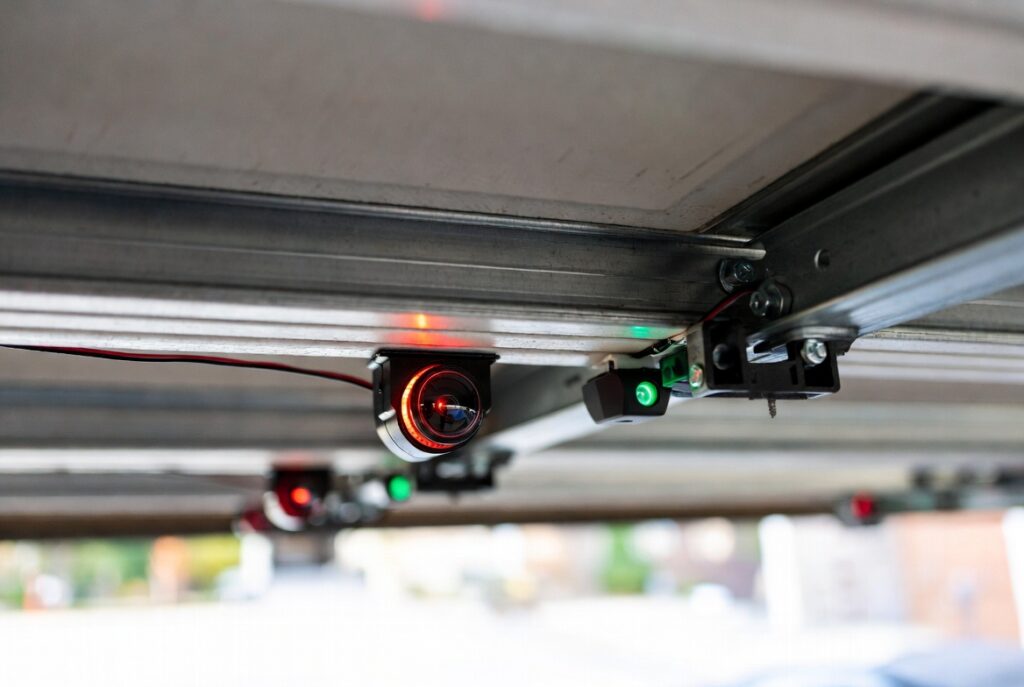
When Your Garage Door Suddenly Refuses to Close
It usually happens at the worst possible time. You press the garage remote while rushing to work… the door starts moving… then suddenly reverses and refuses to close.You try again. Same thing.
Then you notice a blinking red light near the bottom of the garage door track.
For many Northern Virginia homeowners, this moment instantly becomes frustrating because the issue feels random. The opener still has power. The remote still works. But the garage door simply won’t cooperate.
That blinking red sensor light is actually your garage system trying to warn you about something.
And in most cases, the problem is surprisingly simple once you understand what the sensors are designed to do.
Let’s break down exactly what causes garage door sensors to blink red, how to identify the real issue, and what homeowners can safely check before the situation becomes more serious.
What Are Garage Door Sensors?
Garage door safety sensors are small photo-eye devices mounted near the bottom of the garage door tracks.
Their purpose is extremely important:
- Detect obstacles
- Prevent accidental closing
- Protect children, pets, vehicles, and objects
The sensors create an invisible infrared beam across the garage opening.
If anything interrupts that beam, the garage door automatically stops or reverses direction.
This safety feature became standard in modern garage systems because it dramatically reduces injury risk.
What Causes Garage Door Sensors to Blink Red?
This is the question most homeowners search for when the garage suddenly behaves unpredictably.
A blinking red light usually means:
- The sensors are misaligned
- The beam is blocked
- Wiring is interrupted
- Power flow is inconsistent
- The sensor itself is failing
But the exact cause depends on what else the system is doing.
Let’s go through the most common reasons one by one.
1. Sensor Misalignment (Most Common Cause)
This is by far the issue homeowners encounter most often.
Garage door sensors must face each other perfectly for the infrared beam to connect properly.
Even slight movement can break that connection.
Common causes of misalignment:
- Accidental bumps
- Vibrations from door movement
- Loose mounting brackets
- Kids or storage items hitting sensors
When alignment shifts:
- The red light may blink
- The garage door reverses unexpectedly
- The system refuses to close fully
In many cases, the fix is surprisingly simple once alignment is restored.
2. Dirt, Dust, or Spider Webs Blocking the Lens
Garage sensors sit very close to the ground.
That means they constantly collect the following:
- Dust
- Pollen
- Dirt
- Moisture
- Cobwebs
- Pet hair
Many homeowners assume blinking sensors indicate electrical failure when the issue is simply a dirty lens.
Even a thin layer of buildup can weaken the infrared signal.
Quick homeowner check:
Use a soft microfiber cloth to gently clean both sensor lenses.
Avoid harsh cleaners or excessive pressure.
3. Direct Sunlight Interference
This problem is more common than people realize—especially in Northern Virginia homes with west-facing garages.
Strong sunlight can interfere with infrared sensor communication during certain times of day.
Symptoms often include:
- Blinking lights only during afternoon hours
- Intermittent closing problems
- Inconsistent sensor behavior
This issue can appear seasonal because sunlight angles change throughout the year.
4. Loose or Damaged Wiring
Garage door sensors rely on low-voltage wiring connected to the opener system.
Over time, wires may:
- Loosen
- Corrode
- Fray
- Disconnect slightly
This often happens because of:
- Vibration
- Humidity
- Accidental contact
- Pests
A blinking red light may indicate inconsistent power or interrupted communication.
5. Sensor Moisture or Condensation
Virginia humidity can affect garage environments significantly.
Moisture buildup may develop from:
- Temperature fluctuations
- Condensation
- Rain intrusion
- Poor garage ventilation
Sensors exposed to repeated moisture sometimes behave unpredictably.
6. Obstruction in the Door Path
Sometimes the issue is exactly what the sensor is designed for.
Objects blocking the beam may include:
- Bicycles
- Storage bins
- Tools
- Trash cans
- Leaves or debris
Even small objects near ground level can interrupt the infrared signal.
7. Aging or Failing Sensors
Garage sensors don’t last forever.
Older systems may experience:
- Weakened signal strength
- Inconsistent blinking
- Delayed response
- Internal electrical wear
If sensors are very old, replacement may eventually become necessary.
What Different Sensor Light Colors Usually Mean
Many homeowners get confused by blinking patterns.
Here’s a simplified guide:
| Sensor Behavior | Possible Meaning |
| Solid green light | Sensor receiving power |
| Blinking red light | Alignment or obstruction issue |
| No light at all | Power or wiring problem |
| Flickering lights | Weak connection or instability |
Different manufacturers may vary slightly, but blinking red commonly points to communication problems.
Signs the Sensor Issue Is Getting Worse
Sometimes homeowners ignore blinking sensors because the door still works occasionally.
That’s risky.
Watch for:
- Door reversing suddenly
- Intermittent operation
- Clicking sounds without movement
- Delayed closing
- Inconsistent remote response
These symptoms often worsen over time.
Why Garage Door Sensors Matter for Safety
It’s easy to treat sensors as “just another garage part.”
But they are one of the most important safety components in the entire system.
Faulty sensors increase the risk of:
- Accidental door closure
- Injury to children or pets
- Vehicle damage
- Unexpected door movement
Modern garage doors are extremely heavy.
The sensor system exists specifically to reduce serious safety hazards.
Beginner-Friendly Troubleshooting Steps
Before assuming the worst, homeowners can safely perform a few basic checks.
Step 1: Check for Obstructions
Look near the bottom of the garage opening for:
- Storage items
- Debris
- Dirt buildup
Even small objects matter.
Step 2: Clean the Sensor Lenses
Use:
- Microfiber cloth
- Gentle wiping motion
- Dry cleaning method
Avoid spraying liquids directly onto the sensors.
Step 3: Inspect Sensor Alignment
The sensors should face each other directly.
Look for:
- Crooked positioning
- Loose brackets
- Shifted mounts
Sometimes even slight adjustments solve the problem immediately.
Step 4: Observe the Indicator Lights
Watch for:
- Flickering
- Blinking patterns
- Disappearing lights
This helps identify whether the issue is alignment or power-related.
Step 5: Check for Loose Wiring
Only inspect visible wiring safely.
Never handle damaged electrical components aggressively.
Common Mistakes Homeowners Make
Ignoring Intermittent Sensor Problems
If the issue comes and goes, homeowners often postpone inspection.
But intermittent problems usually become permanent later.
Forcing the Garage Door Closed
Some people repeatedly override the system instead of fixing the root problem.
This defeats important safety protections.
Hitting Sensors Accidentally
Storage items, tools, and garbage bins frequently bump sensor brackets out of alignment.
Using Harsh Cleaning Products
Strong chemicals can damage sensor lenses over time.
Preventive Maintenance Tips
Keeping garage sensors functioning properly doesn’t require complicated maintenance.
Simple habits make a huge difference.
Keep the Area Clean
Prevent:
- Dust buildup
- Clutter near sensors
- Debris accumulation
Inspect Alignment Seasonally
Weather changes and vibration can gradually shift sensor positioning.
Protect Sensors From Impact
Avoid placing:
- Bikes
- Heavy tools
- Storage containers
near sensor locations.
Monitor Moisture Levels
If your garage experiences humidity issues, consider improving ventilation.
Real-Life Homeowner Scenario
A homeowner notices the garage door occasionally reversing during rainy weeks.
At first, they assume the opener is failing.
Eventually, the sensors begin blinking red constantly.
After inspection, the real issue turns out to be simple condensation buildup combined with slightly loose alignment brackets.
What felt like a major mechanical problem was actually a preventable sensor issue.
This situation is extremely common.
Why Northern Virginia Homeowners Experience Sensor Problems More Often
Several regional factors contribute:
- Humidity changes
- Seasonal pollen
- Fluctuating temperatures
- Frequent garage usage
- Moisture exposure during storms
These environmental conditions gradually affect sensor performance over time.
Quick Troubleshooting Table
| Problem | Likely Cause |
| Blinking red sensor | Misalignment |
| Door reverses halfway | Beam interruption |
| Sensors flicker randomly | Loose wiring |
| Works during morning only | Sunlight interference |
| No sensor lights | Power issue |
Conclusion
Understanding what causes garage door sensors to blink red helps homeowners avoid unnecessary stress and prevent larger garage system problems.
In most cases, blinking sensors are caused by:
- Misalignment
- Dirt buildup
- Sunlight interference
- Loose wiring
- Moisture exposure
The good news is that many sensor issues are caught early through simple observation and routine maintenance.
For Northern Virginia homeowners, staying proactive with inspections and keeping sensor areas clean can dramatically improve reliability and safety year-round.
Because when garage door sensors stop communicating properly, the entire system becomes less predictable—and that’s not something homeowners should ignore.
FAQs
Why is my garage door sensor blinking red?
Usually because the sensors are misaligned, blocked, dirty, or experiencing wiring issues.
Can dirty garage door sensors stop the door from closing?
Yes. Dirt or debris can interrupt the infrared safety beam.
Is it safe to bypass garage door sensors?
Bypassing sensors removes important safety protections and is not recommended.
Why does my garage door close halfway then reverse?
This often happens when the safety beam becomes interrupted during operation.
How often should garage door sensors be cleaned?
A quick cleaning every few months helps maintain reliable performance.