
Get Support
+1 (703) 665-8657
 By:
By: 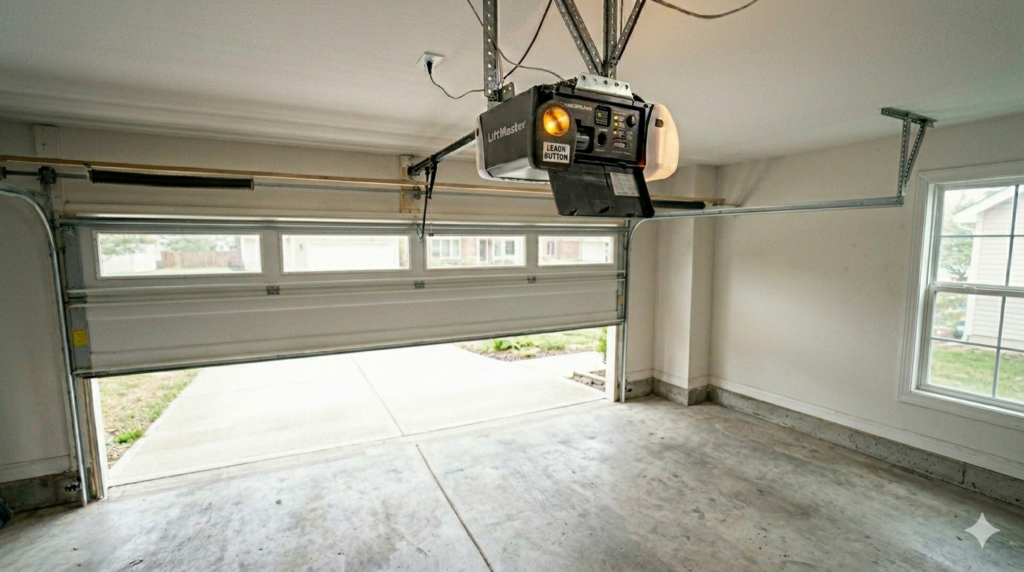
When Your Garage Door Starts Acting “Different”
A garage door opener motor is something most homeowners don’t think about until it stops working. It quietly does its job every day—lifting and lowering a heavy door without much attention. But when it starts failing, it rarely stops suddenly. It gives warning signs first.
In homes across Northern Virginia, one of the most common complaints is: “My garage door is acting strange, but I’m not sure if it’s the motor or something else.”
Understanding what are the warning signs of garage door motor failure can help you catch issues early, avoid sudden breakdowns, and prevent unnecessary stress during your daily routine.
What the Garage Door Motor Actually Does
Before identifying failure signs, it helps to understand the motor’s role.
The garage door motor (also called the opener system) is responsible for:
- Receiving remote or wall switch signals
- Activating the lifting mechanism
- Controlling door movement
- Managing safety sensors and auto-reverse function
It works with components like the trolley, rail system, and drive mechanism. When the motor weakens, the entire system becomes less reliable.
Why Garage Door Motors Start Failing Over Time
Garage door motors don’t fail overnight. They slowly lose efficiency due to continuous usage and environmental factors.
Common reasons include:
- Long-term mechanical wear
- Electrical component fatigue
- Power surges or voltage fluctuations
- Overuse of the system
- Lack of maintenance
- Dust buildup inside the motor housing
In many cases, homeowners assume the issue is with springs or tracks, when in reality, the motor is struggling.
Warning Signs of Garage Door Motor Failure
Recognizing early symptoms can save you from sudden inconvenience.
1. Delayed Response When Using Remote
If you press the remote and the door takes a few seconds longer than usual to respond, the motor may be weakening.
This delay often indicates:
- Internal circuit slowdown
- Reduced motor power output
- Signal processing issues
2. Strange or Unusual Motor Noises
A healthy garage door motor runs relatively smoothly. If you start hearing:
- Grinding
- Buzzing
- Clicking without movement
- Humming without lifting
It could indicate internal strain or worn gears.
3. Door Stops Midway
One of the clearest warning signs is when the door:
- Opens halfway and stops
- Closes partially then reverses
- Gets stuck randomly
This often means the motor is struggling to maintain consistent force.
4. Inconsistent Movement Speed
A failing motor may cause uneven speed such as:
- Fast start, slow finish
- Jerky movement
- Slowing down unexpectedly
This inconsistency shows loss of motor control.
5. Remote or Wall Button Becomes Unreliable
If you notice:
- Button works sometimes, not always
- Multiple presses required
- Intermittent response
The motor’s internal receiver or control board may be failing.
6. Burning Smell or Overheating
A serious warning sign is heat or smell.
If the motor unit feels hot or emits a burning odor, it may be:
- Overworking
- Experiencing electrical stress
- Near internal component failure
This should never be ignored.
7. Door Reverses for No Clear Reason
Garage doors have safety sensors, but if they reverse without obstruction:
- Motor calibration may be off
- Force settings may be failing
- Internal logic system may be malfunctioning
Real-Life Situation Homeowners Often Experience
A homeowner notices their garage door is “slower than usual” in the morning but still works. Over a few weeks, the delay increases, and one day the door refuses to open completely when they are already late for work.
This gradual decline is typical motor failure behavior—slow, inconsistent, and easy to ignore until it becomes urgent.
Motor vs Other Garage Door Problems (Simple Comparison)
Sometimes homeowners confuse motor failure with other mechanical issues.
| Issue | Likely Cause |
| Door heavy to lift manually | Springs or balance issue |
| Loud banging noise | Track or roller issue |
| Door won’t move at all | Motor or power issue |
| Jerky movement | Motor or mechanical resistance |
Understanding this difference helps avoid misdiagnosis.
What You Should Do When You Notice Warning Signs
If your garage door motor shows early failure signs:
Start by observing behavior for consistency. If the issue repeats, stop forcing the system.
Check basic things like:
- Power connection
- Remote batteries
- Sensor alignment
Avoid repeated cycling if the motor is struggling, as this increases internal stress.
Common Mistakes Homeowners Make
Many motor failures become worse due to delayed action.
Avoid:
- Ignoring early delay in movement
- Repeatedly pressing remote when it doesn’t respond
- Assuming the issue is “just temporary”
- Forcing door movement manually
- Overlooking unusual sounds
Small warning signs usually indicate bigger internal issues developing.
How to Prevent Garage Door Motor Problems
While motors naturally wear over time, proper care extends their lifespan.
Preventive tips:
- Test door balance every few months
- Keep tracks clean to reduce motor strain
- Replace remote batteries regularly
- Avoid overuse cycles unnecessarily
- Ensure sensors are clean and aligned
- Schedule periodic system inspections
A well-balanced door reduces motor load significantly.
Why Early Detection Matters
A failing motor doesn’t just affect convenience—it affects safety and reliability.
Early detection helps prevent:
- Sudden door failure
- Lockouts during emergencies
- Additional strain on mechanical parts
- Costly system damage
The longer a weak motor is used, the harder it works until complete failure occurs.
Final Takeaway
Understanding what are the warning signs of garage door motor failure helps homeowners avoid sudden breakdowns and unnecessary stress. Most motors don’t fail instantly—they show clear signals like delay, noise changes, and inconsistent movement.
If your garage door is acting differently than usual, it’s always worth paying attention early rather than waiting for a complete stop.
FAQs
What is the most common sign of garage door motor failure?
Delayed response or inconsistent movement is usually the first noticeable sign.
Can a failing motor still open the garage door?
Yes, but it may become unreliable and eventually stop working completely.
Why does my garage door motor make noise but not move?
It could indicate internal gear damage or motor strain.
How long does a garage door motor usually last?
On average, 10 to 15 years depending on usage and maintenance.
Can weather affect garage door motor performance?
Yes, extreme temperatures and humidity can impact electrical components over time.