
Get Support
+1 (703) 665-8657
 By:
By: 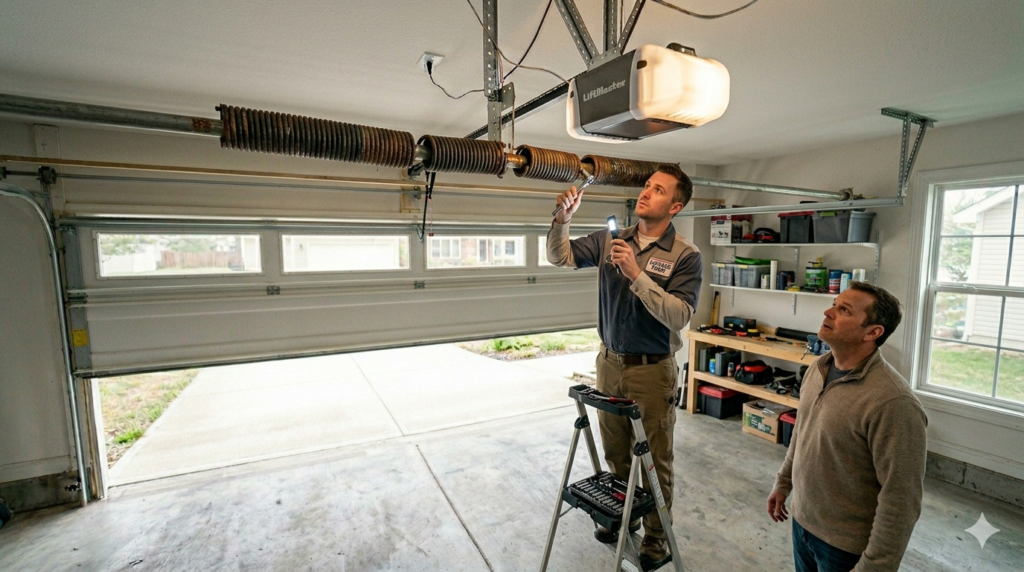
Your garage door is one of the heaviest moving parts of your home. And behind the smooth, quiet lift and close of every garage door are springs—torsion or extension springs—that handle most of the heavy lifting. But like any mechanical part, these springs wear out over time.
If you’ve ever struggled with a garage door that won’t open smoothly, makes loud noises, or seems “off,” you might be wondering: “When should you replace your garage door springs?”
As a homeowner in Northern Virginia, knowing the signs of worn-out springs and understanding when replacement is necessary can save you from costly repairs, property damage, or even injury. In this guide, we’ll break it down step by step, in simple, homeowner-friendly language.
Why Garage Door Springs Matter
Garage door springs may be small in size compared to your entire door, but they are responsible for lifting hundreds of pounds effortlessly. Torsion springs twist above the door to provide lifting force, while extension springs stretch along the sides to counterbalance the door’s weight.
Without properly functioning springs:
- The door can slam shut unexpectedly
- The opener may overwork and burn out
- Manual operation can become impossible
- The door can move unevenly or jerkily, creating safety hazards
Simply put, healthy springs keep your garage door running smoothly, safely, and quietly.
Common Causes for Garage Door Spring Wear
Springs don’t last forever. They gradually wear out due to:
- Frequent Use – Every time the door opens and closes, the springs stretch and twist. Homes in Northern Virginia with multiple daily uses see faster wear.
- Rust and Corrosion – Moisture, humidity, and age can cause springs to rust, weakening them over time.
- Poor Maintenance – Lack of regular lubrication and inspection increases wear.
- Extreme Temperature Fluctuations – Hot summers and cold winters in Northern Virginia can expand or contract metal, stressing springs.
- Age – Most garage door springs last 7–12 years, depending on usage and quality.
Signs You Need to Replace Your Garage Door Springs
You don’t need to wait for a spring to snap to replace it. Here are common signs that your garage door springs are failing:
| Symptom | What It Might Mean |
| The garage door won’t stay open | Springs may be weak or uneven |
| Loud banging or popping noises | Springs are worn, stretched, or about to break |
| The door moves unevenly or jerks | One spring may be broken or tension is uneven |
| Difficulty opening manually | Springs no longer provide enough lift |
| Visible gaps or stretched coils | Clear sign of a damaged torsion or extension spring |
| The door feels heavy | Springs lost tension, putting strain on the opener |
If you notice any of these warning signs, it’s time to inspect your springs—or call a professional.
Step-by-Step Guide: How to Check Your Garage Door Springs
Important Safety Note: Garage door springs are under extreme tension. Attempting replacement or adjustment without experience can cause serious injury. These steps focus on inspection and testing, not full replacement, for homeowners.
1. Visual Inspection
- Stand clear of the door path.
- Inspect torsion springs above the door for:
- Rust or corrosion
- Uneven gaps in coils
- Signs of wear or deformation
- Check extension springs on the sides for:
- Cracks, stretching, or frayed cables
- Broken or disconnected mounting brackets
Tip: Use binoculars if the springs are high up or hard to see.
2. Test Manual Operation
- Disconnect the opener by pulling the red manual release cord.
- Slowly lift the door manually to the halfway point.
What to look for:
- If the door stays in place, springs are balanced.
- If the door drifts up or down, springs may be weak or uneven.
3. Listen for Noise
- Open and close the door manually a few times.
- Loud snapping, popping, or grinding noises indicate worn springs.
Pro tip: Springs that are nearing the end of life often make a creaking or metal-on-metal sound before breaking.
4. Check Door Weight
- Try lifting the door slowly with your hands.
- A properly functioning door should lift with minimal effort.
- If it feels heavy or jerky, the springs aren’t providing enough tension.
5. Inspect Balance Between Springs
- Torsion doors have one or two springs. Extension doors may have a pair on each side.
- Compare tension visually: springs should look similar and stretch evenly.
- Uneven tension is a common cause of jerky or off-balance doors.
How Often Should Springs Be Replaced?
- Standard lifespan: 7–12 years
- High-use doors: May wear out in 5–7 years
- Signs of immediate replacement:
- Broken or cracked coils
- Rusted, stretched, or uneven springs
- The door feels heavy or unsafe
Replacing springs proactively is safer and more cost-effective than waiting for a break.
Safety Tips for Homeowners
- Never try to adjust torsion springs yourself unless trained.
- Always disconnect the opener before manual inspection.
- Keep children and pets away during testing.
- Wear gloves and safety glasses to protect against sharp edges or snapping cables.
- If you see visible gaps or broken coils, call a professional immediately.
Remember: Even small mistakes with springs can cause serious injury.
When to Call a Professional in Northern Virginia
Some spring problems require a licensed garage door technician:
- Broken or snapped springs
- Uneven or misaligned springs
- Worn cables or mounting brackets
- Doors that suddenly drop or slam
- Openers straining despite balanced springs
A professional can safely replace springs, balance the door, and ensure smooth operation. In Northern Virginia, local experts know the unique weather conditions that affect your garage doors, ensuring long-lasting results.
DIY Maintenance to Extend Spring Life
Even if you’re not replacing springs yourself, regular maintenance can extend their lifespan:
- Lubricate Springs and Moving Parts—Use a garage door silicone or lithium-based lubricant every 6 months.
- Tighten Hardware—Loose bolts or brackets increase strain on springs.
- Inspect Tracks and Rollers – Misaligned tracks make springs work harder.
- Operate Door Manually Occasionally—Keeps tension even and prevents stiffness.
- Keep Springs Clean – Remove dust, dirt, and debris to prevent rust and wear.
These simple steps can save money and prolong your garage door’s lifespan.
Signs a Replacement is Urgent
Some spring issues cannot wait. Call a professional immediately if:
- Springs are broken or separated
- Garage door slams shut unexpectedly
- Door cannot be lifted manually
- Cables are fraying or broken
- The door is tilting or unbalanced
Acting fast prevents property damage, injuries, and costly repairs.
Local Expertise for Northern Virginia Homeowners
We provide professional garage door spring replacement and maintenance services across Northern Virginia. Our licensed technicians:
- Replace torsion and extension springs safely
- Balance your garage door for smooth operation
- Inspect openers, rollers, and tracks for optimal performance
- Provide fast, reliable service with homeowner-friendly explanations
If your garage door springs are showing signs of wear, don’t wait for a break—schedule a service today. Your garage door is safer, quieter, and easier to operate with professional care.
Final Thoughts
Garage door springs may seem small, but they play a huge role in your home’s safety and convenience. Knowing when to replace your garage door springs helps prevent accidents, keeps your door operating smoothly, and avoids expensive repairs.
For homeowners in Northern Virginia, regular inspection, simple maintenance, and professional care are the keys to long-lasting garage door performance. If your springs show signs of wear or the door is struggling, contact a trusted local garage door service today. Smooth, safe, and reliable garage door operation is just a phone call away.
Frequently Asked Questions
Q1: How long do garage door springs last?
A: Typically 7–12 years for standard-use doors, depending on quality and frequency of use.
Q2: Can I replace garage door springs myself?
A: It’s not recommended. Springs are under extreme tension and can cause serious injury. Always hire a licensed technician.
Q3: How much does it cost to replace garage door springs in Northern Virginia?
A: Costs vary depending on spring type and door size.
Q4: Why does my garage door feel heavy even with springs?
A: Springs may be worn, stretched, or unevenly tensioned. An inspection is necessary to determine replacement needs.
Q5: How can I extend the life of my garage door springs?
A: Regular lubrication, hardware tightening, track inspection, and minimal strain on the door can significantly extend spring life.