Get Support
+1 (703) 665-8657
 By:
By: 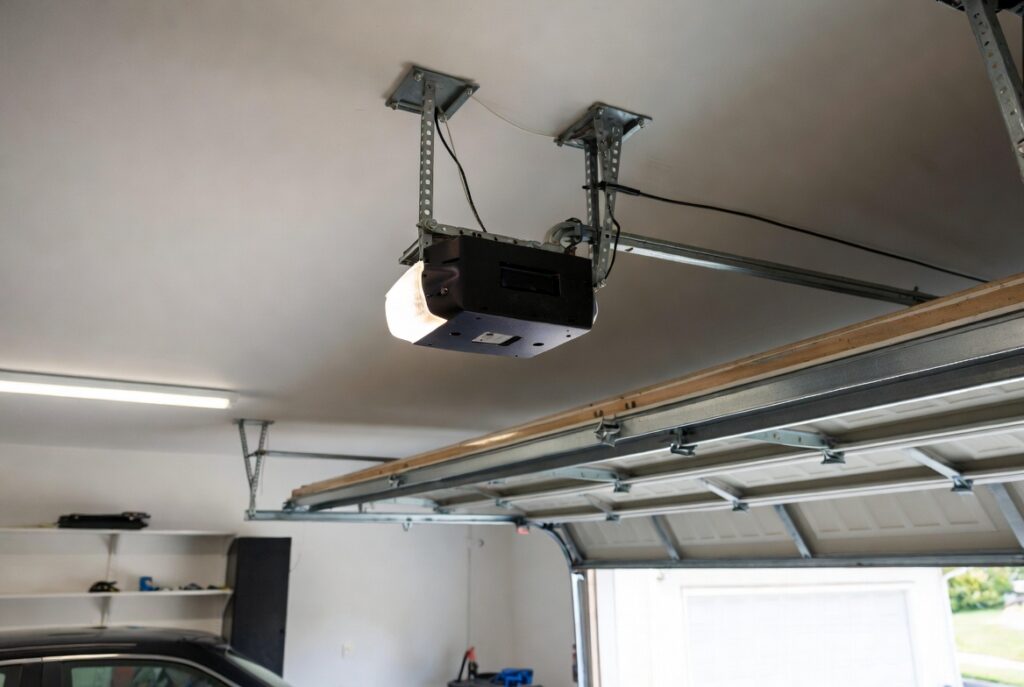
If you press your garage door remote and nothing happens, you’re not alone. It’s one of the most common garage door problems homeowners deal with in Northern Virginia. Maybe the opener hums, but the door won’t move. Maybe the wall button works but the remote doesn’t. Or maybe the door starts to close and suddenly reverses for no clear reason.
The good news? Many garage door opener issues can be diagnosed with a few simple checks.
As someone who works with garage door systems regularly, I can tell you that a lot of opener problems come down to small things—dead batteries, misaligned sensors, power issues, or settings that need a quick reset. In this guide, I’ll walk you through how to troubleshoot and fix a garage door opener in a way that’s easy to follow, even if you’re not especially handy.
Whether you’re dealing with an older chain-drive unit or a newer smart opener, this step-by-step guide will help you understand what’s wrong, what you can safely fix yourself, and when it’s time to call a professional in Northern Virginia.
What Is a Garage Door Opener and Why Does It Stop Working?
A garage door opener is the motorized system that opens and closes your garage door when you use a remote, wall switch, keypad, or smartphone app. It works together with rails, a drive system (chain, belt, or screw), sensors, and the garage door itself.
When something goes wrong, it usually shows up in one of these ways:
- The remote stops responding
- The wall button doesn’t work
- The opener makes noise, but the door doesn’t move
- The door opens halfway and stops
- The door reverses before fully closing
- The opener lights flash repeatedly
- The garage door moves unevenly or jerks
In many Northern Virginia homes, seasonal weather changes can also affect performance. Cold snaps, humidity, dust buildup, and power surges can all cause opener issues over time.
Common Signs Your Garage Door Opener Has a Problem
Before you start troubleshooting, it helps to know the warning signs.
Watch for these common symptoms:
- Remote works inconsistently
- Wall switch doesn’t activate the opener
- Door won’t open or close fully
- Door starts moving, then reverses
- Motor hums or buzzes
- Grinding, rattling, or squeaking sounds
- Safety sensor lights blink
- Smart opener loses Wi-Fi connection
- Keypad stops accepting the code
If you’ve noticed one or more of these, don’t panic. Most issues can be narrowed down quickly.
Quick Reference Table: Garage Door Opener Problems and Fixes
Here’s a simple troubleshooting table you can use right away:
| Problem | Likely Cause | Quick Fix |
| Remote not working | Dead battery or lost programming | Replace battery and reprogram remote |
| Wall button doesn’t work | Power issue or wiring problem | Check outlet, breaker, and wall switch wiring |
| Door won’t close | Misaligned safety sensors | Clean and realign sensors |
| Opener runs but door doesn’t move | Trolley disconnected | Reconnect the trolley |
| Door reverses while closing | Sensor issue or limit settings | Check sensors and adjust travel limits |
| Grinding noise | Worn gears or loose chain | Lubricate parts or inspect drive system |
| Motor hums but no movement | Faulty capacitor or stuck motor | Unplug unit and inspect; call a pro if needed |
| Smart opener offline | Wi-Fi or app sync issue | Reconnect to Wi-Fi and update the app |
How a Garage Door Opener Works
You don’t need to be a technician to understand the basics.
A garage door opener has a few key parts:
- Motor unit – the main power source that drives the system
- Rail and trolley – guides the door movement
- Drive system – chain, belt, or screw that moves the trolley
- Remote and wall switch – send commands to open or close
- Safety sensors – prevent the door from closing on a person or object
- Travel/limit settings – control how far the door opens and closes
If one part isn’t working properly, the whole system can act up.
Step-by-Step: How to Troubleshoot and Fix a Garage Door Opener
Let’s go through the troubleshooting process the same way a professional would—starting with the simplest checks first.
Step 1: Check the Power Source First
This sounds basic, but it’s one of the most overlooked issues.
What to do:
- Make sure the opener is plugged in securely
- Test the outlet by plugging in another device
- Check your home’s circuit breaker
- Reset any GFCI outlet in the garage (common in many Northern Virginia homes)
Why this matters:
If the opener has no power, nothing else will work—not the remote, wall switch, or motor.
Step 2: Test the Remote and Wall Button
If the opener has power but still doesn’t respond, check the controls.
Try this:
- Replace the remote battery
- Test the wall button
- Try a second remote if you have one
- Reprogram the remote if it lost connection
If the wall button works but the remote doesn’t:
That usually means:
- Dead remote battery
- Lost programming
- Signal interference
- Faulty remote
If neither works:
That points to:
- Power issue
- Logic board issue
- Wiring problem
- Safety lock mode enabled
Some homeowners accidentally activate the vacation lock on the wall control, which disables remote access. Check for that before going further.
Step 3: Inspect the Safety Sensors
This is one of the most common garage door opener issues.
The safety sensors sit near the bottom of the garage door tracks. They create an invisible beam. If the beam is blocked or misaligned, the opener won’t close the door.
Signs of sensor trouble:
- Door starts to close, then reverses
- Opener lights blink
- One or both sensor lights are off or flashing
How to fix it:
- Wipe both sensor lenses with a soft cloth
- Remove dirt, spider webs, leaves, or debris
- Make sure both sensors are facing each other directly
- Gently adjust until both indicator lights stay solid
In Northern Virginia, pollen, dust, and seasonal debris often cause sensor issues more often than homeowners realize.
Step 4: Make Sure the Trolley Is Engaged
If the opener sounds like it’s working but the door doesn’t move, the trolley may be disconnected.
This often happens if someone pulls the red emergency release cord.
How to check:
- Look at the trolley on the opener rail
- If it’s disengaged, the motor will run, but the door won’t move
- Reconnect it by moving the door manually or running the opener until it clicks back into place
This is a very common and very fixable issue.
Step 5: Test the Garage Door Manually
Before assuming the opener is bad, test the door itself.
Here’s how:
- Pull the emergency release cord
- Lift the garage door manually
- Move it up and down slowly
What should happen:
The door should move smoothly and stay relatively balanced.
If the door feels:
- Too heavy
- Jerky
- Crooked
- Stuck in one section
…then the problem may be with the door hardware, not the opener.
Possible issues include:
- Worn rollers
- Bent tracks
- Broken springs
- Loose cables
- Track obstructions
If the door itself is struggling, the opener can’t do its job properly.
Step 6: Listen to the Sounds the Opener Makes
Garage door openers usually “tell” you what’s wrong if you listen carefully.
Common sounds and what they mean:
Grinding noise
Possible cause:
- Worn internal gears
- Damaged drive gear assembly
Rattling or clanking
Possible cause:
- Loose chain
- Loose hardware
- Vibrating brackets
Humming but no movement
Possible cause:
- Stuck motor
- Bad capacitor
- Mechanical jam
Squeaking or squealing
Possible cause:
- Dry rollers
- Rail friction
- Need for lubrication
A quick lubrication of moving metal parts (not the sensors or belt) can sometimes solve noise issues and improve performance.
Step 7: Check the Chain, Belt, or Screw Drive
Different openers use different drive systems:
- Chain-drive openers – durable but noisier
- Belt-drive openers – quieter and smoother
- Screw-drive openers – fewer moving parts but sensitive to lubrication
What to inspect:
- Sagging chain
- Loose belt tension
- Dry screw drive
- Visible wear or fraying
- Loose mounting hardware
What to do:
- Tighten the chain or belt slightly if it sags too much
- Do not overtighten
- Lubricate screw-drive components if recommended by the manufacturer
- Tighten loose bolts or brackets
If the belt is cracked or the chain is badly worn, replacement may be needed.
Step 8: Adjust the Travel Limits and Force Settings
If your garage door:
- Won’t close all the way
- Reverses too soon
- Slams shut
- Stops before fully opening
…then the travel limit or force settings may be off.
What these settings do:
- Travel limits tell the opener how far the door should move
- Force settings control how much power it uses
How to adjust:
Most opener units have small dials or screws labeled:
- Up / Down
- Open / Close
- Force / Limit
Make small adjustments only, then test the door.
Important:
If you set the force too high, the door may become unsafe. If you’re unsure, this is a good place to stop and call a pro.
Step 9: Reset or Reprogram the Garage Door Opener
Sometimes the opener simply needs a fresh start.
When to reset:
- The remote suddenly stops working
- Keypad loses memory
- Smart app disconnects
- The opener acts erratically after a power outage
Basic reset process:
- Locate the ‘Learn’ or ‘Program’ button on the opener motor
- Press and hold it for several seconds until the light changes
- Reprogram remotes and keypads as needed
This can often solve the following:
- Signal problems
- Memory glitches
- Lost pairings
- Intermittent remote response
If you’re troubleshooting a smart garage door opener in Northern Virginia, also reconnect it to Wi-Fi and check for firmware updates in the app.
Step 10: Troubleshoot Smart Garage Door Opener Issues
Newer systems like MyQ, Chamberlain, LiftMaster, and Genie smart openers can have app-related issues.
Common smart opener problems:
- Opener offline in the app
- Delayed response
- Won’t reconnect after router reset
- Voice assistant stops working
What to do:
- Confirm Wi-Fi signal reaches the garage
- Restart your router
- Reconnect the opener through the app
- Check for firmware updates
- Re-sync with Alexa, Google Home, or HomeKit
- Reset network settings if needed
A weak Wi-Fi signal in detached garages or garages with thick walls is common in some Northern Virginia homes.
Safety Tips You Should Never Ignore
Garage doors are heavy, and opener systems work under tension. Some parts are safe to inspect. Others are not.
Follow these safety rules:
- Always unplug the opener before touching internal parts
- Never attempt torsion spring repair yourself
- Do not loosen cables under tension
- Keep kids and pets away during testing
- Wear gloves and safety glasses
- Use a stable ladder if inspecting the motor unit
- Don’t force a stuck door open with the opener
Most important:
If you suspect a broken spring, damaged cable, or off-track door, stop immediately and call a professional.
When to Call a Professional Garage Door Technician
DIY troubleshooting is great for minor issues. But some repairs should absolutely be left to an expert.
Call a professional if:
- The opener hums but the door won’t move
- The garage door is too heavy to lift manually
- You see a broken spring
- A cable is loose, frayed, or snapped
- The door is crooked or off track
- The opener logic board may be damaged
- You smell burning from the motor
- The opener still fails after all basic troubleshooting
If you’re in Northern Virginia, it’s especially smart to get help quickly before weather changes or daily use make the issue worse.
Simple Maintenance Tips to Prevent Future Opener Problems
A little routine maintenance can save you from bigger repairs later.
Here’s what I recommend:
- Replace remote batteries once a year
- Clean safety sensors every few months
- Lubricate rollers, hinges, and metal moving parts
- Tighten loose hardware
- Test the auto-reverse feature monthly
- Inspect the chain or belt for wear
- Check door balance twice a year
- Keep the tracks free of debris
Preventive maintenance is one of the best ways to extend the life of your opener and reduce emergency repair calls.
Need Help With Garage Door Opener Repair in Northern Virginia?
If you’ve tried the steps above and your garage door opener still isn’t working correctly, it may be time for a professional inspection.
Some opener problems are simple. Others involve electrical parts, worn gears, springs, or door balance issues that need expert attention. If you’re dealing with a stubborn opener, unusual noises, or a door that won’t move safely, a local Northern Virginia garage door technician can diagnose the issue quickly and recommend the right fix—without risking damage to the opener or the door.
A fast repair today can often prevent a much more expensive replacement later.
Final Thoughts
A malfunctioning opener can throw off your whole day, especially when you’re rushing out in the morning or trying to get home after work. But the good news is that many common issues—like dead batteries, dirty sensors, power loss, or disconnected trolleys—are surprisingly easy to fix.
If you start with the basics and work step by step, you can often troubleshoot a garage door opener without much stress. And when the issue turns out to be something bigger, like a spring problem or motor failure, you’ll know exactly when it’s time to call in a professional.
For homeowners in Northern Virginia, keeping your garage door opener in good shape isn’t just about convenience—it’s about safety, security, and protecting one of the hardest-working systems in your home.
Frequently Asked Questions
1. Why is my garage door opener running but the door not moving?
This usually means the trolley is disconnected, often from the emergency release cord being pulled. It can also point to a worn drive gear or broken coupler inside the opener.
2. Why does my garage door start closing and then go back up?
This is often caused by misaligned or dirty safety sensors. It can also happen if the travel limits are set incorrectly or something is blocking the sensor beam.
3. Can I reset my garage door opener myself?
Yes, in many cases you can. Most openers have a Learn or Program button that lets you reset and reprogram remotes, keypads, and smart connections.
4. How long do garage door openers usually last?
Most garage door openers last 10 to 15 years, depending on usage, maintenance, and the quality of the unit. Regular maintenance can help extend that lifespan.
5. Is it safe to repair a garage door opener on my own?
Basic troubleshooting like checking power, replacing batteries, cleaning sensors, and resetting remotes is usually safe. But if the issue involves springs, cables, or electrical internals, it’s best to call a professional.